
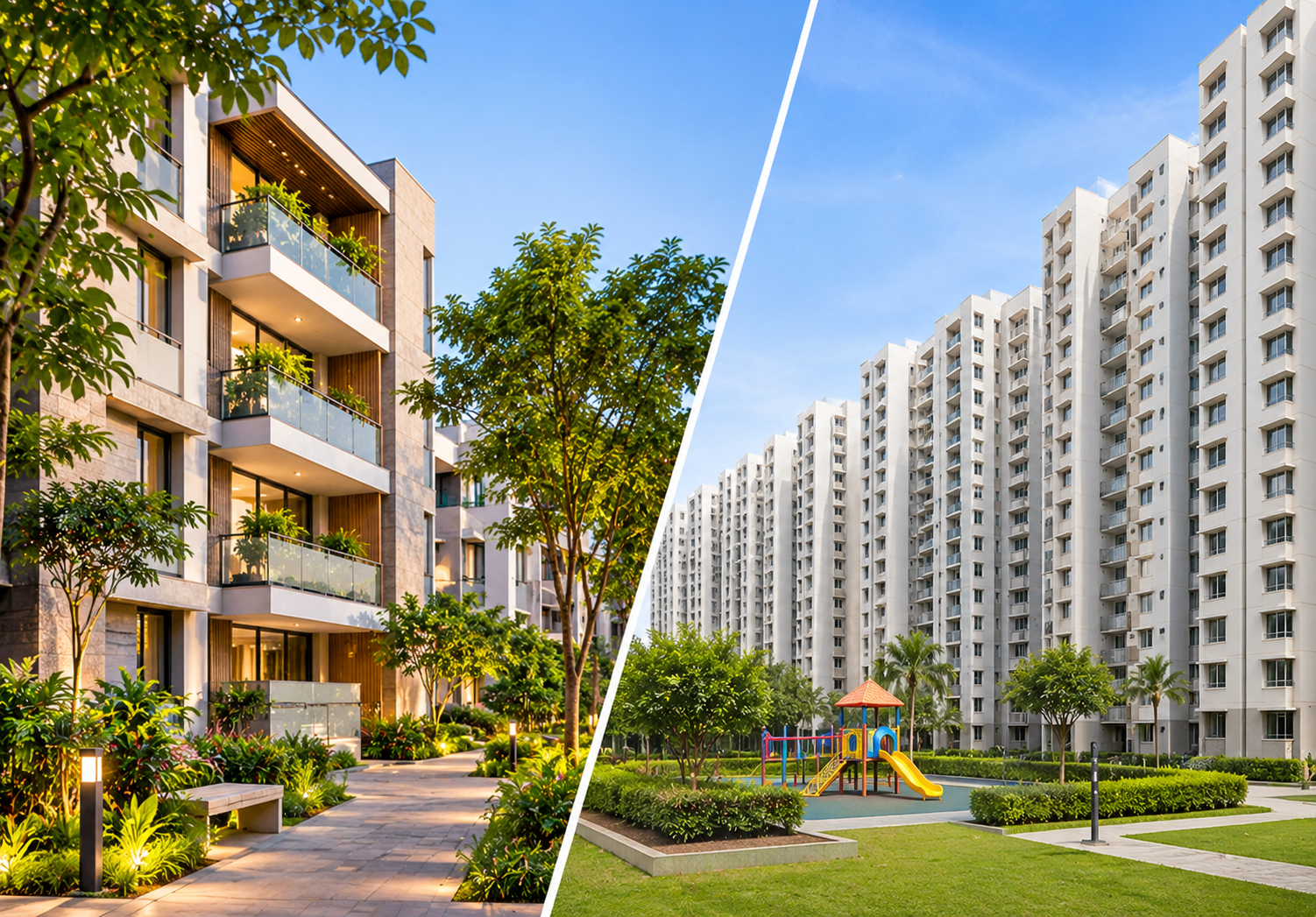

Most Chennai flat buyers can recite a project’s amenities list without looking. They are a pool, clubhouse, jogging track, party hall, etc. Far fewer ask about the number that shapes daily life more than any of those, which is how many families will share the gate.
Raunaq Boutique Homes has built its business around keeping that number small, which makes its projects a useful test case. Six homes in Kilpauk, 14 villas in Mogappair West, 49 flats in Chromepet. The difference from a large township shows up in water, money, neighbours and, decades later, redevelopment.
Where the big projects are
The high-density housing in Chennai is normally located at the fringe of the city since land parcels are still available. In the case of OMR, a Siruseri township accommodates 1,000 flats in 92 acres of land, while a Perungudi development accommodates 557 flats in 4.27 acres of land. This makes provision for pools, clubhouses and shuttles reasonable since the flats share costs.
Central neighbourhoods work differently. In Kilpauk, Anna Nagar or Adyar, land usually comes as old bungalow plots measured in grounds, so small buildings are the norm. Emerald, Raunaq’s Kilpauk project, sits on roughly five and a half grounds. Rankings of the best builders in Chennai tend to lead with acreage and launches, which naturally favours the township model.
Water and the fuzz
Chennai will not forget the year 2019 during which there were shortages of water in the lakes of the city and the residents of apartments had to keep on booking tankers. The sumps and borewells provide water to all the households that exist above them. In a smaller structure, the ones making these decisions would be the neighbors. Tamil Nadu has made rainwater harvesting compulsory for buildings since 2003, and Avinya’s specification includes it, but a system serving 49 homes has far fewer pits and pipes to check after each monsoon.
Two-thirds of how many?
Tamil Nadu Apartment Ownership Act of 2022 was enforced in March 2024, with regulations being notified in September. The Act enables a building to be redeveloped upon getting written approval from two-thirds of the occupants. For a block of 49 households, it requires 33 households to agree to the redevelopment. In a township of 1,000 homes, it requires 667 – that’s a completely different ball game in 40 years.
The same mathematics holds true for daily occurrences such as association meetings, guest parking, and security. Where the watchman at the gates recognizes every car, the security aspect is taken care of in one way or the other. Elevators work on the same principle. Imagine, at 8.30 am, with vans and office cars lined up, it becomes important how many apartments use each elevator.
Parking is yet another subtle difference between the two types of apartments. Most apartments in Chennai have their vehicles parked on elevated ground floors, as in Avinya, whereas high rises make use of parking space below ground level. This choice is taken into account by the purchasers after considering the 2015 floods and Cyclone of December 2023.
What a smaller project costs you
Fewer homes also means fewer shared extras. Avinya in Chromepet, for example, has CrossFit and cardio areas, table tennis, snooker and a kids’ play area, but no swimming pool. Central land is expensive, so boutique flats rarely win on price per square foot. Resale buyers also have fewer recent sales in the same building to compare against, and a smaller association has a thinner reserve fund when a big repair comes due.
Some of the best builders in Chennai run large communities very well, with professional facility managers and amenities that a 50-home block simply can’t support. For most families it comes down to whether they’ll use the pool every week, or would rather pay less each month and know the people on their floor.
How small Raunaq’s projects actually are
The company started in 2012 as Raunaq Foundations, the real estate arm of a family group whose first business was steel. It is led by Raunaq Rungta and is a member of CREDAI. In about 14 years it has delivered more than 500 homes and around 6 lakh sq ft, across localities including Adyar, Anna Nagar, Kilpauk and Tambaram.
Spread over a dozen or so completed buildings, that works out to a few dozen homes per project. The 2025 change of name to Raunaq Boutique Homes simply put that habit into the brand. Liverpool in Madhavaram, with 120 homes on just over an acre, sits at the larger end of its range and is still a fraction of an OMR township.
To sum it up
Chennai needs both kinds of housing, and plenty of families are happy in a 600-home community on OMR. The case for small is quieter: often a lower monthly bill, owners who can actually agree on things, and neighbours who aren’t strangers. That is the best Raunaq Foundations has made since 2012, and the unit count on each of its projects is the plainest evidence of it.
